- Jared Seidel
- Posts
- Maker vs Manager

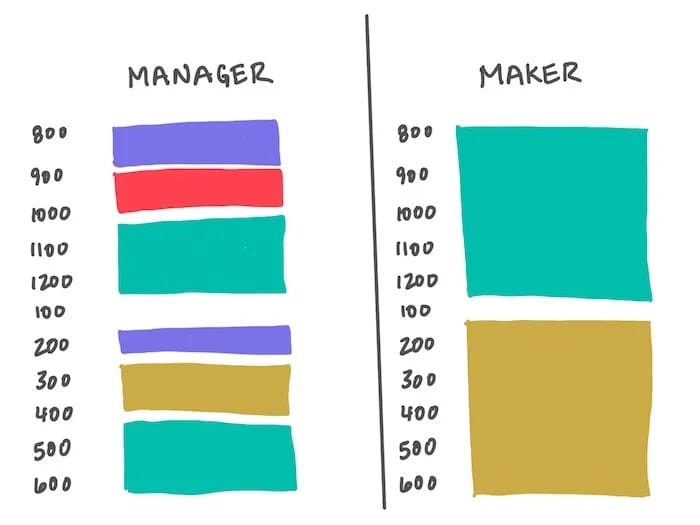
Maker vs Manager
This newsletter was inspired by this Paul Graham post
A calendar conflict that you didn't see coming.
“Let's find time on the calendar.”
or
“Hey, wanna grab coffee next week?”
Both of these examples represent the hundreds of millions of exchanges that happen every day. This may seem harmless, but what you don’t see is this type of exchange is 10x more costly to one person than the other.
There’s two different ways to manage time for two types of workers. There are Makers and then are Managers. The one that you and I are most familiar with is: Managers. Where you divide your time up into 30-60 mins blocks between the hours of 8:00 am and 5:00 pm. This is how most people work. Each block is different from the block before.
The manager’s work often depends on the meetings they have with others. Where they collect and report data to persuade, lead, and encourage others to make decisions. They have a pretty clear work day. They work until their meetings are over. For them an empty time slot is a missed opportunity to connect. Their goal is to maximize the time of their day by filling up every slot possible.
Then there’s Makers. These make up a smaller number of workers, which is shrinking day by day (shout-out AI!). They actually make stuff, but they do it in way more than 30-60 minute slots. Depending on what they make, they may need WAY more time. They view time blocks as half day or full day blocks. Therefore they have fewer blocks. They have 1 or 2 chunks per day or 7-14 per week.
Manager vs. Maker Schedule
The work is viewed the same from the outside, day to day. But then Makers do have not work inputs like “keystrokes” or “emails sent.” But variable outputs like what they made. These tasks are rarely finished in any 30-minute block. Their days typically have a similar start time but a variable finish time. They work towards a specific goal. Their performance decides when they finish their day. And they only switch tasks when the project is done.
The work has relatively lower urgency when compared to the manager but at the same time can have the highest importance. Most of their effort goes into learning how to solve the problem rather than solving the problem itself. They might get stuck for 2 hours and then bang, it hits them.
Based on the nature of their work, Makers incur a monumental consequence for needing to switch tasks for a meeting. It breaks their larger chunk of work into two smaller chunks. For example, a 30min 10am meeting breaks their morning block into 2 hours and 1.5 hours. Not nearly enough time to get back into deep focus mode.
Whats worse is they then suffer when they need to focus on an upcoming meeting which will distract them from their current work. This is know as the Zeigarnik effect.
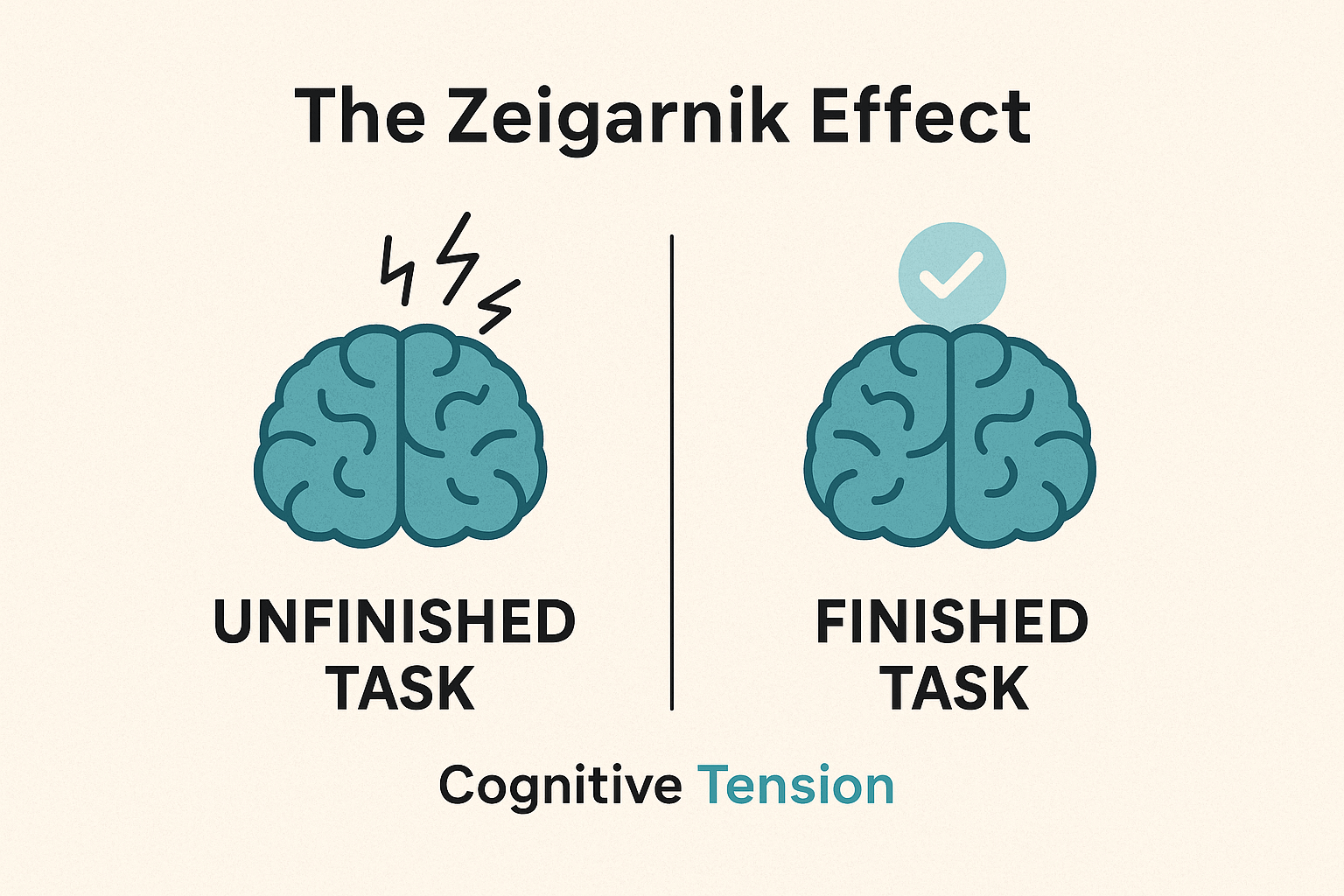
Normally, meetings are a good thing. But for the makers, whats bad is they think about whats coming up in the meeting and all the open tasks coming up. Distracting them from the work the you’re focusing on in the moment. To a Maker, an empty calendar means more time to get work done. Their objective is to maximize the blank space on the calendar. So they can have as many large uninterrupted time blocks as possible.
My problem? I was a “manager” for the past 3 years of my career. I was a literal “product manager,” my job was to sit in meetings and get alignment. I have been so anchored in that routine and lifestyle that it has hindered my ability to make as much as I would like.
Now I'm trying to build again. A product, a brand, and a business. And I started to realize I was defaulting to a calendar built for someone else's priorities, like the manager's schedule.
So here’s what I changed.
Tuesdays and Thursdays = maker days - No meetings, just deep work. Creating, building, automating.
MWF = Manager Days - Batch meeting calls and catch-ups where I can continuously context-switch.
If I ever feel stuck, busy but not productive, I ask myself: "Am I operating on the wrong calendar?"
Makers need blank space. Managers need filled space. When I know which one I'm in, I design my week around that. I protect my maker time, my output goes up, and my stress goes down.
Curate your calendar accordingly.
You’re Awesome,
Jared
P.S. - yes you can do this if you have a full time job. You just need to block off time ahead of time and feel comfortable saying no to “urgent meetings” that are not actually urgent.
If you enjoyed this post or know someone who may find it useful, please share it with them and encourage them to subscribe here 🙌🏻
Things Worth Clicking
A few gems I found on the internet this week - no digging required
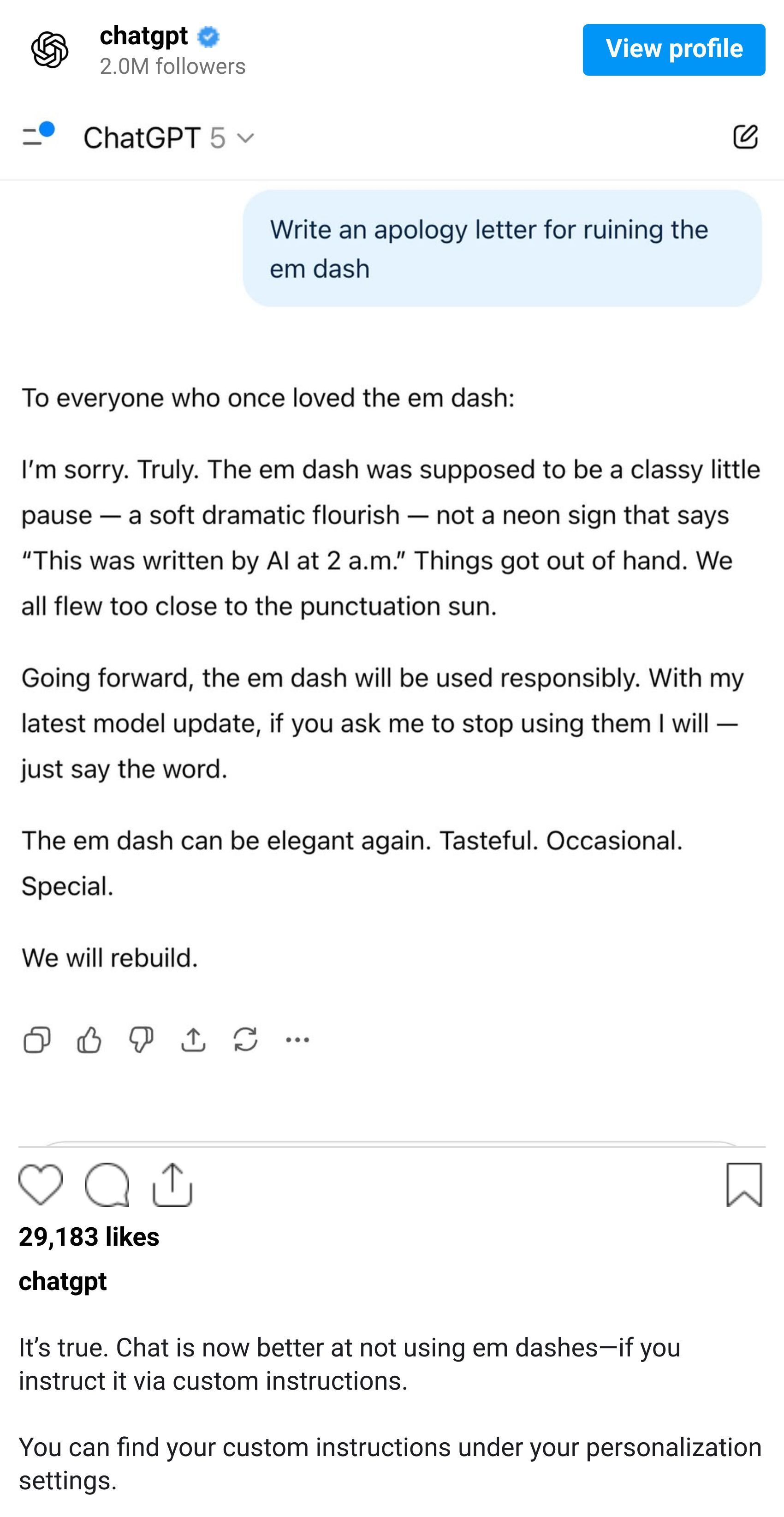
OpenAI being self-aware
How to make $100K guide on YouTube by Tin Tin Smith.
21 facts about how to throw a good party
I Dig So You Don’t Have To
1 Set:

2 IDs:
Fun fact: back when I did photography in San Diego. I shot a show for Soraya👇🏻


What did you think of this email?You can add more once you pick a response 👇🏻 |
Reply